Industry
SMS for banks, lenders and insurers
A message about money is read only if the customer trusts where it came from. Send under a registered name, to the markets that will accept it.
- Registered sender names per market
- Every destination checked before scheduling
- Each message followed to delivery
Hi Ana, your payment to [YOUR COMPANY] is due on 14 Mar. Pay in the app or call [YOUR NUMBER]. We never ask for your details by text.
Sender ID
Registered
Three messages the customer has to act on
None of them is a promotion. Each one asks the customer to do something with their own money, which is exactly why the name at the top matters.
Payment reminders
A due date remembered in time is a payment that arrives without a collections call. Personalize with the amount and the date the customer can already see in their account.
Account alerts
A single notice sent from your own systems the moment the event happens, through the API, with the result reported back to you.
Renewal and policy notices
The message everyone on a book has to see before a date. A segment built on the renewal field reaches them all once, and nobody twice.
The name on the message is half the message
A customer decides whether to trust a text about money before they have finished the first line, and the first thing they read is who it is from. A registered sender name puts your brand there instead of a number nobody knows, and keeps this message in the same thread as the ones you sent last quarter, where it can be compared with them.
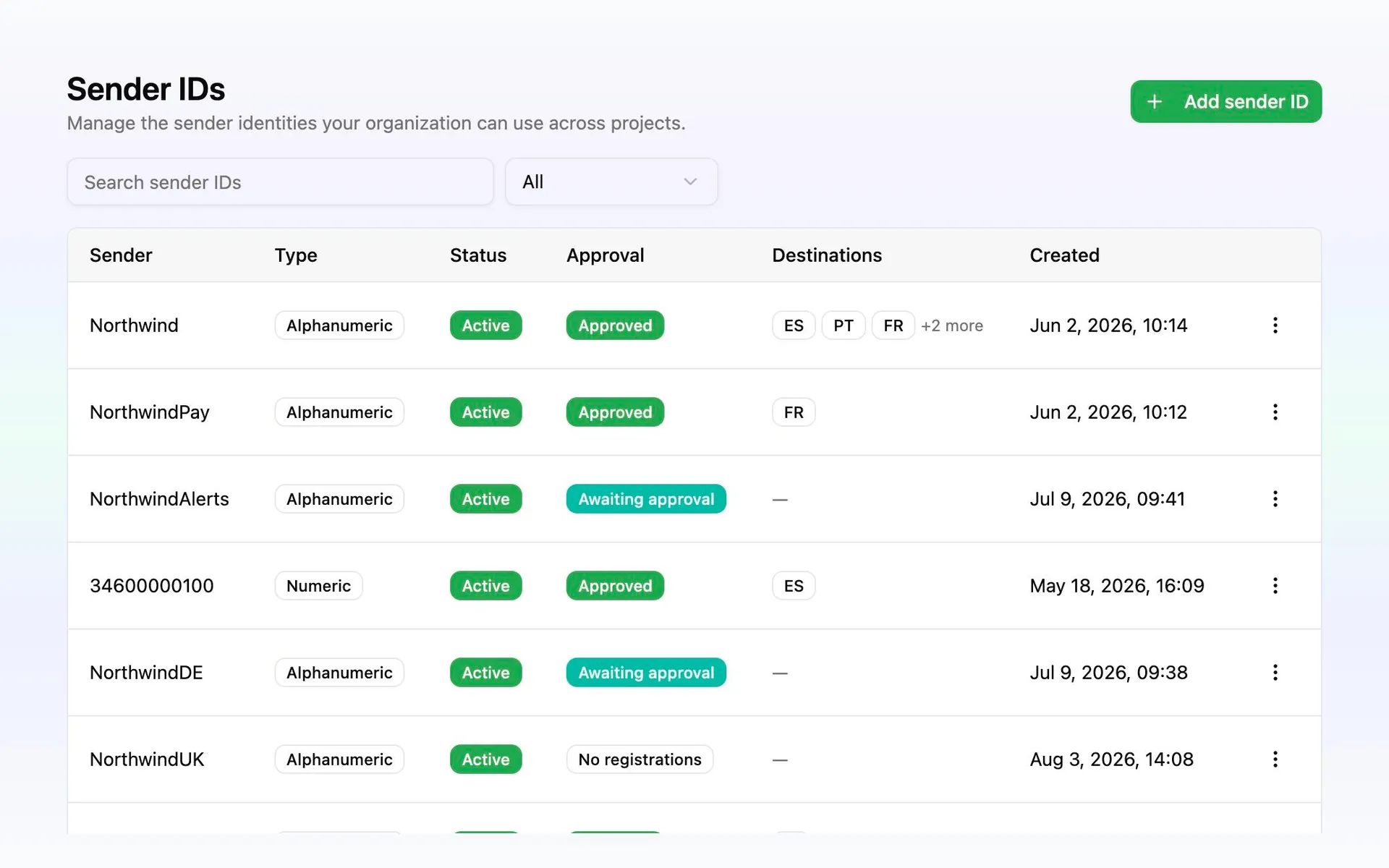
Which names a market will accept is not the same everywhere, and some destinations want a name registered before anything can go out under it at all. Messalogy holds the names you have registered per project and market, checks every country in the audience against them before a campaign can be scheduled, and stops on a market that is not ready rather than quietly falling back to something the customer would not recognize.
From an account file to a send that is trusted
The name is set up once per market. After that the work is the list and the wording.
Register the name customers already know
Add your sending names per project and market. Only the ones active and approved for a market are offered when you build a campaign that reaches it.
Import the accounts with their dates
The fields you already keep, such as due date, product, branch, language and renewal, become attributes, and a reminder can say something the customer can check.
Write it so it needs no proof
Say what the customer can already verify and point them where they normally go. The editor counts the message as you type, so a line too many does not turn one message into two across the whole book.
Check the destinations, then schedule
Every country in the audience is checked against your approved names before approval. Review the recipients and the total, pick the hour, and follow the run in reporting.